Chicken Train at iLOTBet: The Format Explained
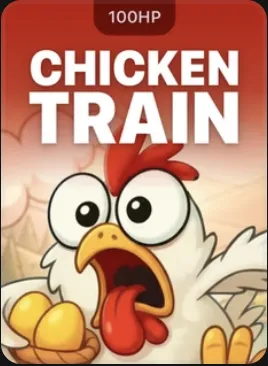
Unlike teen patti or andar bahar, this 100HP Gaming title uses no cards, and it has no slot reels either. Chicken Train is a crossing game: a chicken moves ahead one step at a time, and each step lifts the multiplier applied to the stake. A round can be closed after any step, but if the chicken is caught first, the round ends and the stake is lost. The studio lists a 97% return to player and a x55,833 multiplier cap, and it adds difficulty modes that set the risk of each step. This page explains the format only, as staking money from India is prohibited under the Online Gaming Act 2025.
Visit the websiteDifficulty Modes: Where the Volatility Is Selected
Many casino games come with volatility set by the studio. Chicken Train moves that setting into a difficulty mode selected ahead of each round. On the lower modes, a step is less likely to end the round and the multiplier climbs gradually. On the higher modes, each step carries more danger and the multiplier rises more sharply. A harder setting does not improve the built-in return; it only shifts the balance between regular small wins and scarce large ones. The rules panel lists each mode's name and exact step odds, so that is the place to look for those details.
| Choice | Typical effect across many rounds |
|---|---|
| Easy mode, stopping soon | Frequent small wins, with the balance changing slowly |
| Easy mode, stopping much later | Medium-sized wins, with more rounds lost in the final steps |
| Hard mode, stopping soon | Wins are scarcer but bigger |
| Hard mode, stopping much later | Most rounds lost, with very high multipliers once in a while |
Chicken Train and Aviator Compared
A cash-out button is central to both titles, yet they feel quite different. Aviator runs its multiplier on a clock, leaving the player to respond in the moment. Chicken Train waits for a press before each new step, which turns every choice into a separate, unhurried one. The missing timer makes the game simpler to follow, but it also leaves room for the "just one more step" impulse. That pull is a known feature of the format, and a target fixed in advance is the usual way of describing how to counter it.
What the Return Means in Rupees
The bet selector inside the game shows its smallest stake. A 97% published return means that, across a very long run, the game retains about three rupees of every hundred staked, although any short sequence can end far from that figure, above all on high difficulty. Staking from India is prohibited, so these points only describe how the maths behaves:
- Changing difficulty mode after a loss does not improve the return built into the game.
- A fixed cash-out step changes how often rounds end in a win and how large those wins are, not the long-run return.
- Balance divided by stake gives the number of rounds it covers, which is simple arithmetic and no forecast of the results.
With the x55,833 cap, a ₹20 round would in theory top out at about ₹1.1 million. That figure is a mathematical ceiling at the far end of the riskiest path, and it should not be read as a realistic result.
Does the Cap Work Like a Jackpot?
It does not. Players share no prize pool, and no amount builds up between rounds. Each round begins from zero, and the cap merely sets the highest point the multiplier can reach. A screenshot of an enormous multiplier shows a rare outlier and tells you nothing about what will come next.
The Law and Getting Support in India
Online money games, Chicken Train included, have been prohibited in India since 1 May 2026, and this guide is not an invitation to stake. Quick, choice-based games can also absorb time and money without much notice. The responsible gambling page lists support options if gambling is becoming a worry. Chicken Train is intended for adults 18+ only.
FAQ
Which studio created Chicken Train?
Is the long-run return higher on a harder mode?
Does the game allow a cash-out after step one?
Where is the minimum stake shown?
← Back to the full list of featured games